Why February Is a Smart Month To Tune Up Your AC Before Spring

Boost HVAC Efficiency and Cut Winter Bills in 5 Steps
Mid-winter HVAC efficiency improvements can boost comfort and reduce heating costs when your system is under the most stress. From basic filter checks to professional tune-ups, a few proactive steps go a long way in keeping your home warm, your air cleaner, and your energy bills lower.
Key Takeaways
An AC tune-up in February helps you prepare for spring by improving efficiency, preventing breakdowns, and reducing long-term repair costs.
- Scheduling service in February helps you avoid long wait times and address issues before your AC runs daily.
- Early HVAC maintenance improves efficiency, which can lower energy bills and reduce wear on your system.
- Professional AC service supports better airflow and indoor air quality while helping your system run reliably.
A February AC tune-up gives you a valuable head start before warmer weather arrives. While winter temperatures remain steady, early in the new year is the ideal time to focus on pre-spring HVAC maintenance without long wait times or rushed decisions. Scheduling service early helps you prepare your cooling system for spring, control energy costs, and avoid unexpected problems when demand increases.
February AC Tune-Up Benefits Before Spring Weather Hits
February often sits between peak heating and cooling seasons, which makes it one of the most practical times to schedule AC service. HVAC providers tend to have more flexible scheduling, allowing you to book service without competing with emergency calls.
A tune-up also prepares your system before it shifts into regular use. Instead of discovering issues during the first warm stretch, you give technicians time to address concerns while your system is under less strain. This timing supports consistent HVAC maintenance and helps prevent disruptions once spring temperatures fluctuate.
Another advantage is planning flexibility. If service uncovers worn components or declining performance, you have time to evaluate repair timelines or consider AC installation options without seasonal pressure.
How Pre-Spring HVAC Maintenance Improves Efficiency
Pre-spring HVAC maintenance helps your system operate more efficiently when cooling demand increases. Over time, dust buildup, airflow restrictions, and minor mechanical issues reduce performance, even if the system still runs.
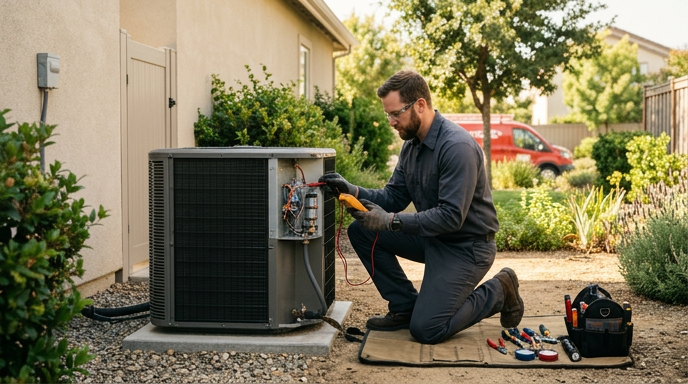
During your HVAC tune-up, technicians inspect and clean key components such as coils and fans. They also test refrigerant levels and verify airflow. These steps help you keep your system running smoothly and cool your home evenly while using less energy.
Improved efficiency benefits you in several ways. Lower energy use can reduce monthly utility bills, and smoother operation places less stress on system components. This helps your AC maintain performance as outdoor temperatures rise and usage becomes more consistent.
Catch Small Problems Early With February AC Service
Small system issues rarely stay small. Loose electrical connections, worn belts, or restricted airflow can worsen quickly once your AC runs daily. February AC service allows these issues to be identified and corrected early.
Addressing concerns ahead of spring helps you avoid:
● Emergency breakdowns during the first heat wave
● Higher repair costs tied to delayed maintenance
● Uneven cooling or reduced comfort indoors
Early service also supports better decision-making. If your system shows signs of age or declining reliability, you have time to explore repair options or plan for AC installation before peak season limits availability.
Indoor Air Quality Benefits From Early HVAC Maintenance
Your cooling system plays a major role in indoor air quality. When dust, debris, or contaminants collect inside the system, they can circulate throughout your home once cooling season begins.
A February AC tune-up helps reduce this buildup before spring. Replacing filters, cleaning internal components, and checking airflow improves circulation and supports cleaner indoor air. This can be especially helpful during spring, when allergens increase.
If your home uses both heating and cooling equipment, scheduling furnace service alongside AC maintenance helps keep your entire system working together. Balanced system performance supports comfort, airflow, and air quality throughout seasonal transitions.
A Practical February AC Tune-Up Checklist
Pre-spring HVAC maintenance works best when handled with a clear plan that prepares your system for consistent use rather than reacting to problems later. A typical HVAC checklist may include:
● Cleaning condenser and evaporator coils
● Testing thermostat accuracy and system controls
● Inspecting electrical components and safety features
● Checking refrigerant levels and airflow balance
Completing these steps early helps reduce surprise service calls and keeps your system ready as outdoor temperatures change.
How Pre-Spring HVAC Maintenance Supports Cost Control
Preventive HVAC maintenance often costs less than emergency repairs during peak season. Performing an AC tune-up in February helps you address minor issues before they escalate into expensive failures.
Efficiency improvements can also lead to energy savings over time. When your system runs smoothly, it uses less power to maintain comfort. These savings often continue throughout spring and summer.
Early service also helps you plan financially. If inspections suggest your system may need future upgrades, you can research AC installation options, compare solutions, and budget accordingly instead of making rushed choices.
Prepare Your Home for Spring Comfort Ahead of Time
If you want fewer surprises and better comfort this spring, you need pre-spring HVAC maintenance to prepare your cooling system before the season changes. By scheduling a February AC tune-up with a trusted provider like Next Level HVAC, you give your system the attention it needs before demand rises. Contact us today to help your home stay comfortable, efficient, and ready for the months ahead.
Share
More Posts That Might Interest You