5 Ways To Improve HVAC Efficiency This February (and Lower Your Bills)
Boost HVAC Efficiency and Cut Winter Bills in 5 Steps
Mid-winter HVAC efficiency improvements can boost comfort and reduce heating costs when your system is under the most stress. From basic filter checks to professional tune-ups, a few proactive steps go a long way in keeping your home warm, your air cleaner, and your energy bills lower. You can improve comfort and lower winter energy costs with a few simple HVAC efficiency steps, while professional service helps protect your system long term.
Key Takeaways
- Checking filters, clearing vents, sealing leaks, and testing your thermostat can improve winter HVAC performance.
- Better airflow and cleaner filters support comfort and air quality while reducing strain on your system.
- Professional HVAC maintenance helps prevent costly repairs and keeps your system running efficiently year-round, which is why many homeowners rely on Next Level HVAC for ongoing care.
February often brings long stretches of cold weather that put added pressure on your heating system. Even so, you still have control over comfort and energy costs. With a few targeted HVAC efficiency tips, you can improve winter HVAC performance while keeping your home warm and your bills more manageable. These steps work well in mid-winter and help prepare your system for the change in seasons.
How To Improve Your HVAC Performance
By February, your furnace has likely been running for months without much of a break. When airflow slows or parts begin to wear down, your system may struggle to keep temperatures steady. This can lead to higher energy use and uneven heating throughout your home.
Improving HVAC efficiency now helps reduce stress on your system during one of the coldest times of the year. It also gives you a chance to fix small issues before they grow into larger problems.
1. Check Air Filters To Improve HVAC Efficiency
Checking your air filter is one of the simplest ways to support HVAC efficiency. When filters fill with dust and debris, airflow drops and your furnace has to work harder to push warm air through your home. That extra effort can increase energy costs.
During winter, you should check filters every 30 to 60 days. Replacing them on schedule helps maintain steady airflow and supports healthier indoor air quality.
Benefits of a clean air filter include:
- Better airflow throughout your home
- Lower heating costs
- Reduced strain on furnace components
Clean filters also help limit dust buildup, which matters when your home stays closed up for long periods.
2. Clean Vents and Registers for Better Airflow
Air cannot circulate properly when vents are blocked or covered. Furniture, rugs, and pet hair often reduce airflow without you noticing. This can leave some rooms feeling colder than others.
Clearing vents and wiping down registers helps warm air move more freely. This improves winter HVAC performance and supports more even temperatures throughout your home. It can also reduce how often your furnace cycles on and off.
3. Test Your Thermostat for Steady Winter Comfort
Your thermostat plays a major role in how efficiently your furnace runs. If it misreads the temperature or reacts slowly, your system may run longer than needed. That can raise energy use and reduce comfort.
Test your thermostat by adjusting the temperature and checking how quickly the system responds. If you use a programmable or smart thermostat, review the schedule to make sure it matches your routine. Small adjustments, such as lowering the temperature overnight, can make a noticeable difference.
If problems continue, professional furnace service can help identify wiring or sensor issues.
4. Seal Air Leaks To Reduce Heat Loss
Warm air escapes easily through small gaps around windows, doors, and attic openings. When cold air enters at the same time, your furnace must work harder to maintain the set temperature.
Sealing these leaks supports HVAC efficiency and helps keep heat inside where it belongs. Weatherstripping and caulk work well for most reminders. This step also reduces drafts, which can make rooms feel uncomfortable even when the furnace runs.
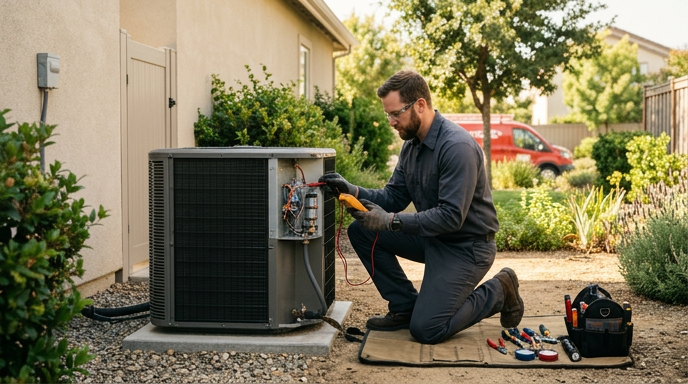
5. Schedule a Professional Inspection Before Spring
Late winter is an ideal time to schedule a professional inspection. Many homeowners wait until spring, when appointment availability becomes limited. Booking early helps you stay ahead of seasonal demand.
A professional inspection may include:
- Checking airflow and safety controls
- Testing heating components
- Reviewing overall system condition
Regular HVAC maintenance helps extend equipment life and prepares your system for upcoming AC service. It also builds on the value of a furnace tune-up before winter by confirming everything held up through the cold months.
How Air Quality Affects Winter HVAC Efficiency
Winter often traps dust, allergens, and dry air inside your home. Poor air quality can affect comfort and make your system work harder to circulate air.
Replacing filters, cleaning vents, and managing humidity all help support better air quality. These steps reduce strain on your HVAC system while making your home feel more comfortable during cold weather.
Plan Ahead for Year-Round System Care
Mid-winter improvements do more than help you get through February. They set the stage for smoother seasonal transitions and fewer surprises later in the year. Staying consistent with regular HVAC maintenance supports long-term performance.
Addressing issues now makes it easier to plan future furnace service or AC service without rushing when temperatures change.
Stay Comfortable and Lower Energy Costs This Winter
You don’t have to wait for spring to make your home more comfortable or reduce HVAC costs. Small actions like changing filters, sealing leaks, and scheduling inspections can make a real difference.
At Next Level HVAC, we provide professional support with furnace service, air quality solutions, or seasonal maintenance. Contact us to keep your system running efficiently all year long.
Share
More Posts That Might Interest You