HVAC Tape or Mastic: Which Is Best for Ductwork Repairs?
Signs Your Furnace Is Leaking Carbon Monoxide
Leaks in your home's duct system are pretty common, but they can cause a lot of problems, including wasted energy and difficulty maintaining comfortable temperatures throughout the year. Sealing up those leaks isn't prohibitively difficult or expensive, but homeowners must learn how to recognize leaks before they can contact professionals for repairs.
Recognize Ductwork Leaks
Yearly inspections can help you and your maintenance professional notice issues while they are still minor. In between those inspections, you may notice that your monthly energy costs are rising. Maybe some rooms are heated or cooled more efficiently than others. Finally, leaks in the ductwork can also cause an increased buildup of dust.
Determine Where To Make Repairs
Once you suspect leaks, it's time to discover the exact location of leaks. A professional response is best for accurate information:
- Contact your preferred HVAC company for a ductwork inspection.
- Turn your air conditioner or heater on full blast for increased air pressure.
- Begin at joints between air ducts. Fittings are some of the most common areas to weaken.
- Watch for dried-out, aging duct tape.
With specialized tools, professionals pinpoint the location of leaks and then determine the best course of corrective action.
Compare HVAC Tape or Mastic
There are two common ways to repair ductwork: HVAC tape and mastic. Which is better for your home? Take a look at the basic definitions and some of the pros and cons of each:
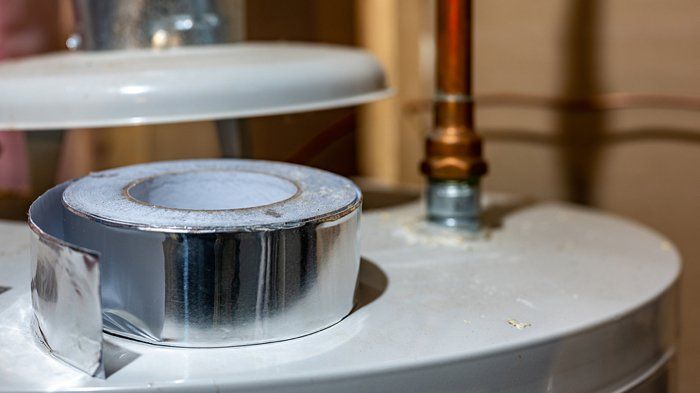
HVAC Tape
When it comes to furnace tape, you have several options, including foil, metal, fabric, and polyethylene. The variety of available duct tape can make it hard to choose the right product. Remember that you need a permanent option that will stand up to heavy air pressure and prolonged exposure to hot and cold temperatures. Avoid the common mistake of choosing "duct" tape when you actually need "HVAC" tape.
Pros
- Has a clean appearance
- Comes in affordable varieties
- Is easy to apply
Cons
- May need to be replaced more often than mastic
- Only the low-end varieties are less expensive
Mastic
This adhesive is used in many different types of home improvement construction. It may be used to hold floor tiles in place or to join plywood or concrete panels. For your ductwork, you must use duct mastic. This is a gooey material that seals joints once gaps have been reinforced with sheet-metal screws and fiberglass mesh tape.
Pros
- Provides a reliable repair
- Is preferred by contractors
- Lasts for several years
Cons
- Looks sloppy
- Less expensive than high-end furnace tape
- Makes a mess during installation
Make Your Choice
The easiest way to choose between furnace tape and mastic is to leave the decision up to your HVAC professional. You can also check the temperature ratings on each product and compare those ratings to the specific temperatures in your system. Consider the possibility of thermal conductivity that can result in swelling or constriction that may affect your repairs. Finally, think about the potential need for water resistance; mastic is more likely to stand up to any moisture along your duct system than tape.
Whether you decide to use tape or mastic to seal your ducts, the primary goal is a durable, reliable seal. Get more information about how to achieve this seal by contacting us online or at 707-228-9921.
Share
More Posts That Might Interest You