Why Does My AC Smell Weird When I First Turn It On? A Homeowner's Guide
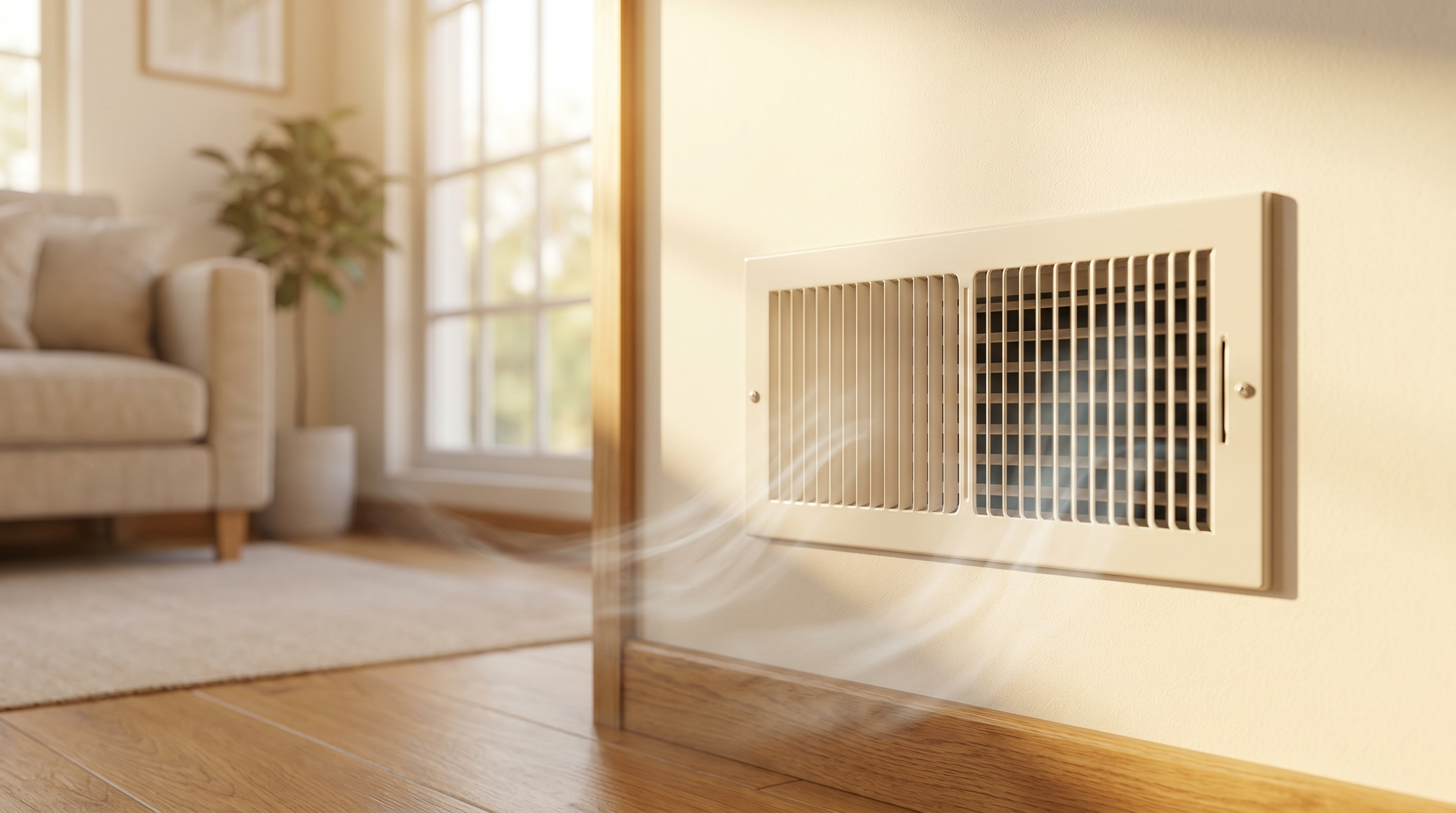
Why Your AC Smells Weird at Spring Startup
When your AC kicks on for the first time each spring, the smell coming through your vents is telling you something. Most first-startup odors are harmless and brief — but a few are genuine warning signs that call for shutting the system down and calling a technician before anything else.
Key Takeaways
- A musty or mildewy smell that clears quickly may just be light condensation burning off; one that lingers or keeps returning likely means mold or mildew growth inside the unit or ductwork.
- A dusty, faintly smoky odor at startup is normal — it's dust on the coil burning off — and usually clears within 10–20 minutes on its own.
- A sweet or chemical smell can indicate a refrigerant leak; turn the system off and schedule service right away.
- A sharp burning plastic or electrical odor is the most urgent signal — shut the system down at the thermostat and breaker and don't restart it until a technician inspects it.
- A pre-season tune-up is the most effective way to prevent startup odors entirely, catching drain line buildup, coil debris, and refrigerant issues before the first hot day of the year.
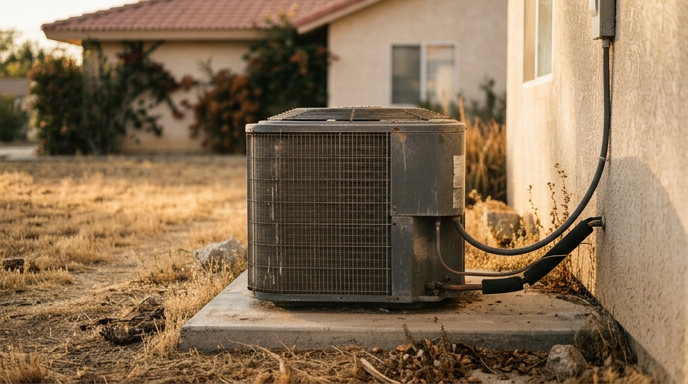
Your air conditioner has been sitting unused for months. During that time, dust settles onto coils and other internal components, moisture can collect in the drain pan, and the whole system simply sits dormant. When you flip it back on, that first burst of air pushes out whatever has been quietly accumulating inside the unit.
Before you start worrying, know that first-startup odors are one of the most common concerns HVAC technicians hear every spring. Some are completely harmless, while others are worth acting on quickly. Here's a clear breakdown of what you might be smelling when you turn on your AC unit and what it actually means.
Two Common Reasons an AC Unit Smells
Not every strange smell means something is wrong, but each one is telling you something about your system's condition. Here are the two most common odors homeowners notice at startup and what's causing them.
1. A Musty or Mildewy Smell
A musty smell is the most common complaint homeowners have when first firing up the AC for the season. It usually means moisture has been sitting somewhere inside the system, often in the drain pan, on the evaporator coil, or inside the ductwork. That standing moisture creates exactly the right conditions for mold and mildew to grow over the off-season.
A faint mustiness that clears up within a few minutes may just be light condensation and surface dust working their way out. But if the smell lingers every time the system runs, or keeps returning day after day, you likely have active mold or mildew growth somewhere inside the unit or ducts.
Mold circulating through your vents directly affects indoor air quality, particularly for anyone in the household with allergies or respiratory sensitivities.
2. A Dusty or Burning Smell
A dusty, faintly smoky smell during the first AC startup is one of the most predictable odors on this list, and also one of the most harmless. Over the winter, a thin layer of dust settles onto the evaporator coil and blower components. When the system fires up for the first time, that dust briefly burns off and moves through the vents.
This type of smell typically clears up within 10 to 20 minutes and rarely signals a real problem. If it fades and doesn't return, there's nothing to worry about. If it sticks around or keeps coming back throughout the season, that can point to a heavier buildup or an airflow issue worth addressing.
Either way, scheduling a spring HVAC tune-up before those first hot days can clean out your system and give you a fresh start for the cooling season.
Two AC Smells You Shouldn’t Ignore
If you notice either of the following smells when you start your AC unit, turn the system off immediately and contact a technician before running it again.
1. The Sweet or Chemical Smell
A faintly sweet or chemical odor, sometimes described as ether-like, can signal a refrigerant leak. Refrigerant is what allows your system to remove heat from the air, and a leak affects both your unit's cooling performance and the air you're breathing inside your home.
If you notice a sweet smell, turn the system off and schedule professional AC service as soon as possible. This isn't something that will resolve on its own.
2. The Burning Plastic or Electrical Smell
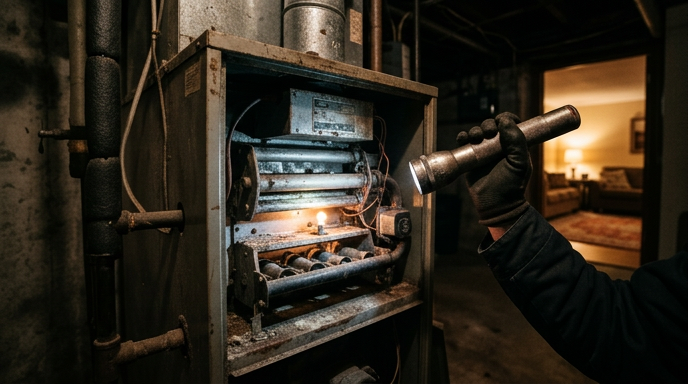
A sharp smell of burning plastic, melting wire, or acrid smoke is the most urgent situation on this list. It can indicate an overheating motor, damaged wiring, or an electrical component that's beginning to fail. Turn the system off at the thermostat (and at the breaker if the smell is strong), and don't restart it until a HVAC technician has inspected the unit.
What's the Best Way To Prevent AC Odors Entirely?
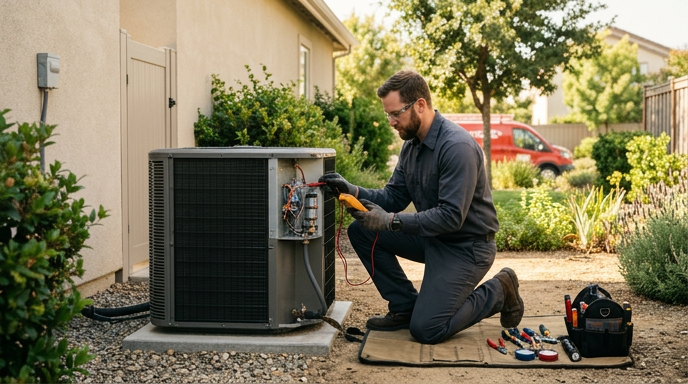
The most effective way to head off most AC startup smells is a pre-season inspection before you run the system for the first time each year. During a professional tune-up, a technician will:
- Clean the evaporator coil
- Flush the condensate drain line
- Check refrigerant levels
- Inspect electrical components
Catching a clogged drain line or buildup on the coil in spring is a lot easier to deal with than discovering it after you start having AC performance issues in the middle of a July heat wave.
Changing your air filter regularly throughout the season also makes a meaningful difference. A clean filter keeps dust and debris from accumulating inside the system, improves airflow, and makes the whole unit run more efficiently.
Next Level HVAC Helps Homeowners Start the Spring Season Right
If your AC fires up with an odor you can't explain, or one that doesn't go away after the first few minutes, the team at Next Level HVAC is here to help. We serve homeowners across Sonoma and Marin Counties with thorough pre-season inspections and honest diagnostics designed to catch small problems before they turn into costly ones. Explore our cooling services or reach out today to schedule an HVAC inspection before the warm weather sets in for good.
Share
More Posts That Might Interest You